A New Education Workshop
Developed by Making Faces Theatre
A new series of STEAM workshops using theatre, puppetry and animal mask to learn about early evolution have been funded by Arts Council England.

In collaboration with the Lapworth Museum of Geology in Birmingham, these workshops are a playful way to explore fantastical creatures and learn about some of the earliest animals to evolve in the oceans around 500 million years ago.
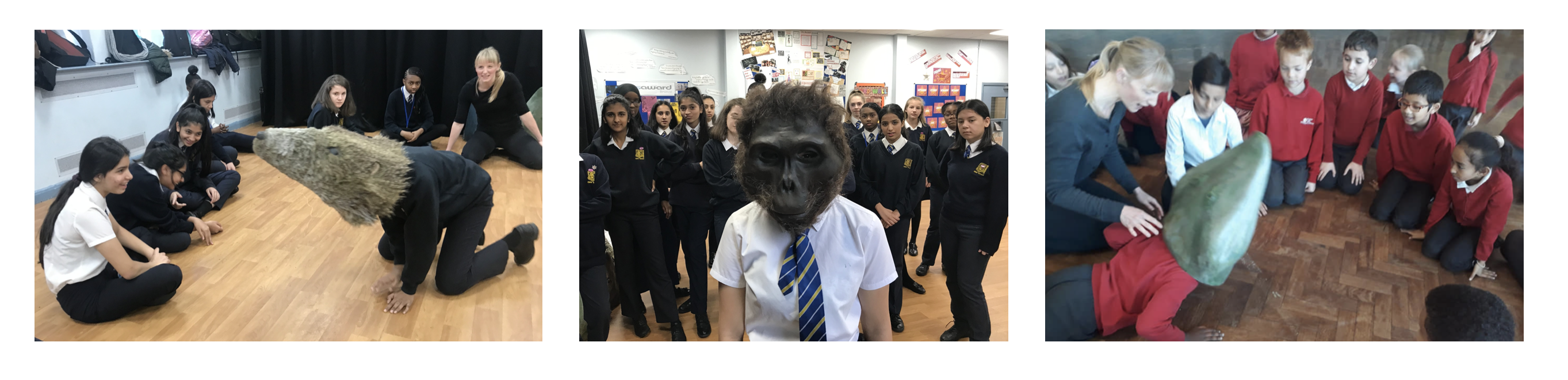
Led by mask-maker and scientist Vicky Wright, from Making Faces Theatre, the workshops use movement, animal costume and play to bring a physical element to learning about this ancient underwater world.
The 90 minute workshops journey through development of the early senses and study species present in the ancient oceans. This includes evolution of the gut, eyes, muscles for movement and predator-prey armouring. In the workshop, we will see how species evolve and adapt in response to their habitat, in particular look at different trilobites and their adaptation of eye position.
Life in the early oceans
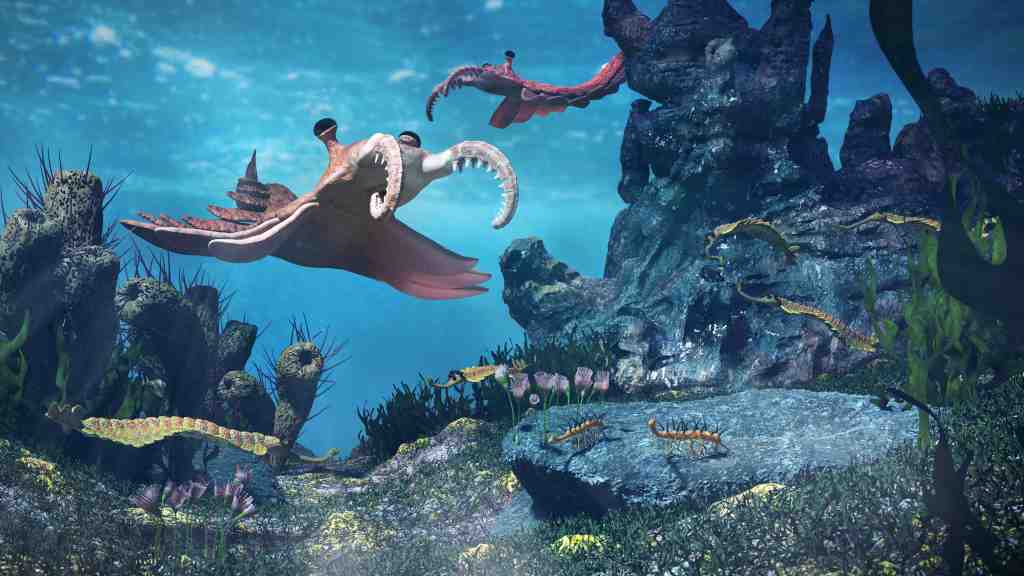
Life in the early oceans, 540 million years ago, was a time when the creative design of evolution ran wild. Known as the “Cambrian Explosion”, the species take unusual and imaginative forms as early sensory movement develops.
There is evidence of a huge range of animals evolving from:
- creatures which absorb food through their skin
- beetle-like animals with no eyes
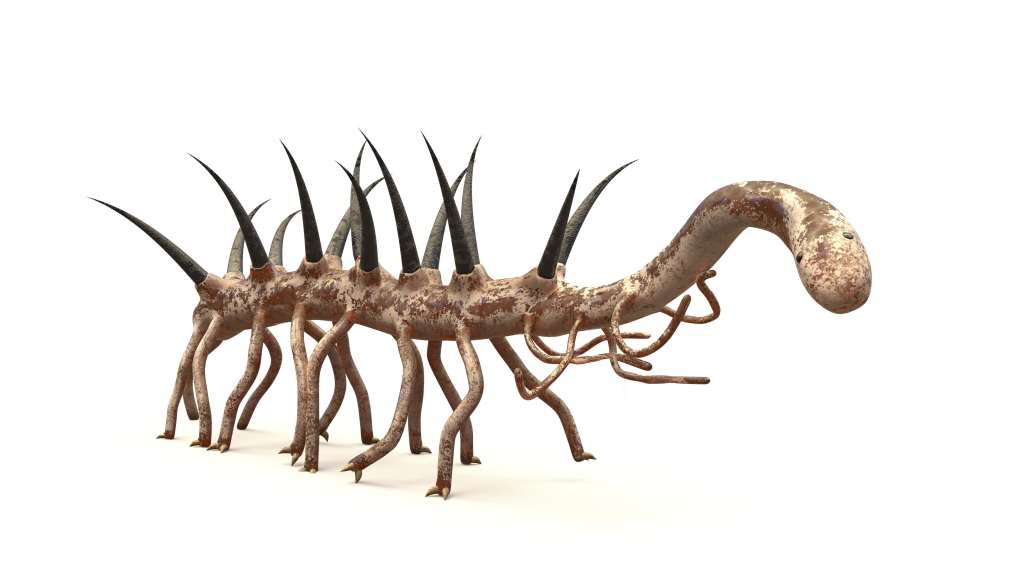
- spine-defending crawlers
- swimmers with five eyes
Taking a creative approach, full of play, animal movement and fun, participants will learn about some of the first animals to evolve, how they adapted and how their fossils have formed. Working in collaboration with the Lapworth Museum, 3D printed replicas of fossils from their collection will give children direct experience of the fossil finds, with the species featured in the workshop tailored to the public collection on display at the museum.
Workshop Information
- For: Key Stage 2 pupils (Year 5 & Year 6)
- Group size: 20 – 30 pupils per workshop.
- Workshops are 90 minutes in length (a shorter version of 75 mins or 60 mins can be requested).
- Region: For primary schools in Birmingham.
Times & Availability
Workshops are available in schools on Mondays, Tuesdays and Wednesday mornings, spanning June – July 2023.
12 workshops have been fully funded by the Arts Council.
To reserve your workshop place, please book a morning or afternoon slot on your ideal day via the BookWhen calendar, and we will later confirm the exact time via email.
Booking link: https://bookwhen.com/makingfacestheatre/e/ev-sd7w-20230605090000
Room requirements
The ideal space is a gym, drama room or school hall. Other rooms can be used but please make sure desks are pulled to the side, and there is an open space in which to move. Students may lie on the floor as this is an active movement-based workshop so a clean floor is ideal!
What students should wear
Easy to move in clothes. This could be gym kit, tracksuit or the regular uniform if it is easy to move in.
There is a workshop booklet that students can fill in, please make sure there are some pencils or colouring crayons available.
Feedback
For the Arts Council, there will be some fun feedback cards for the children to fill in at the end of the workshop and an online questionnaire for teachers. This is to assess, reflect and feedback the impact of this new style of STEAM workshop in the final summary report for the Arts Council, and helps support future funding bids for more projects of this kind.
For any specific enquiries, please email info@makingfacestheatre.co.uk.
Background
Animals of the Ancient Ocean is the second STEAM workshop series to be developed by Making Faces Theatre.
The first workshop series was The Evolution Workshop which toured primary and secondary schools in 2018 – 2019. This used animal mask to explore the species along the evolutionary pathway from fish to man and study the evolution of movement from the water to quadrupedal movement on land, the migration up into the trees and finally the establishment of bipedalism.

The first phase of the project was research-based, collaborating with palaeontologists from Bristol University, with the second phase education based and funded by The Palaeontological Association.
“I found today’s session really enjoyable because I learnt lots of new things while having fun. The facts were interesting, as I didn’t know much about evolution and I found the acting with masks useful to see what it was like. It was fun and interactive.” – Phoebe.
“It was really interesting to explore different forms of movement and how the ancient animals moved.” – Koran.
“It was fascinating to watch and I learnt lots about the evolution of movement as a biology teacher and so the students definitely benefited!” – Mrs Forder, Fitzharrys School
About – Workshop Facilitator
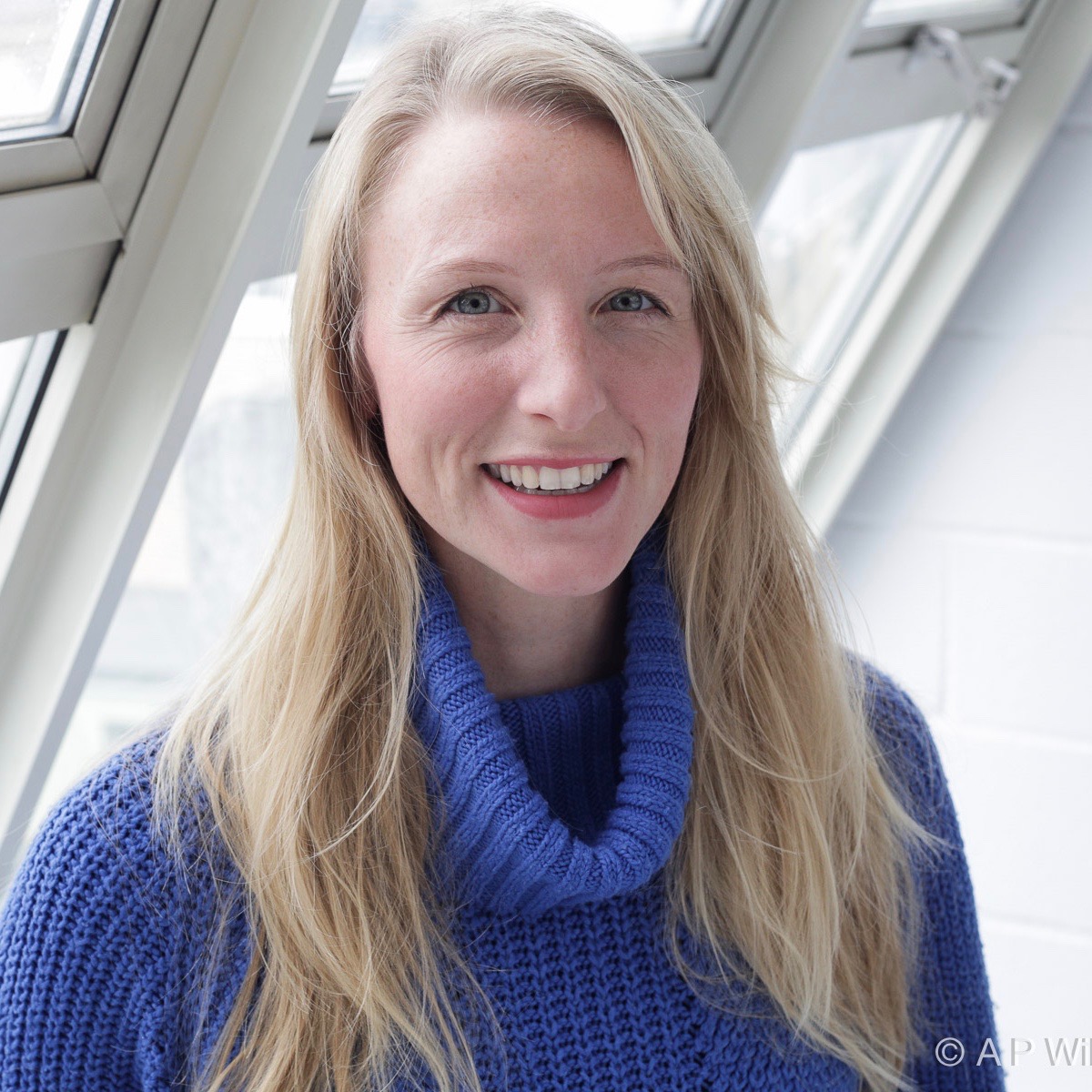
Vicky Wright is a mask-maker, drama teacher and natural scientist. Founder of Making Faces Theatre, she brings together her passion in the arts and sciences to develop new interactive learning expeiences based in movement.
 Making Faces Theatre